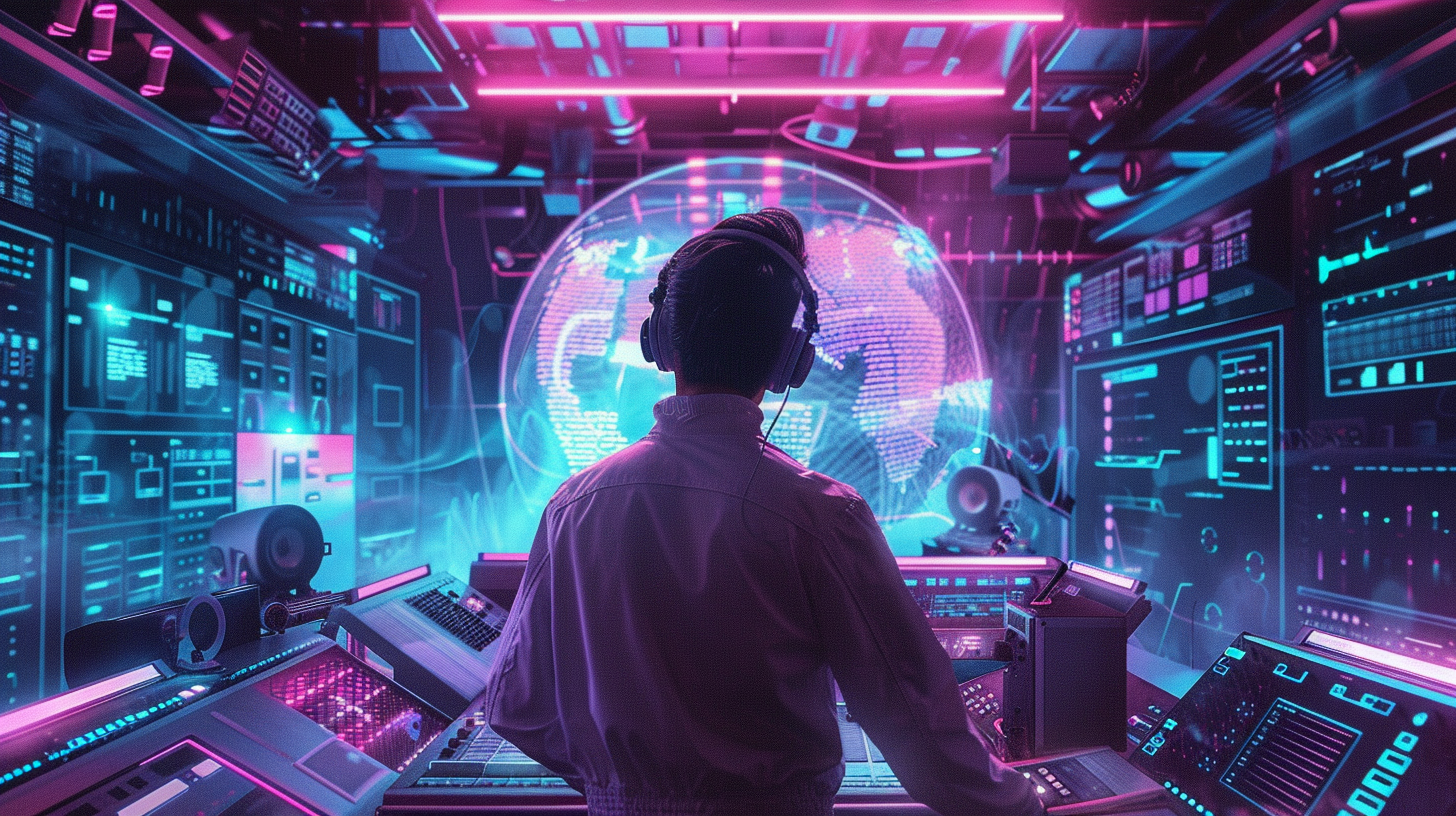
Audience Simulation in Music: Why Synthetic Fan Agents Could Change A&R Forever
A&R has always depended on instinct. The best A&R executives hear potential before the market does. They recognize a voice, a story, a sound or a cultural signal before it becomes obvious. That instinct will remain essential. But the next era of A&R may require something more: the ability to combine human taste with audience simulation in music. This is where Déjà Vu by Unpopular Labs becomes especially relevant.
Déjà Vu is a strategic AI platform built for record labels, A&Rs, managers and artist teams. Its core idea is simple but powerful: use real artist data to create synthetic fan agents, then simulate how those agents might react to proposed creative or strategic moves. For A&R teams, that could change how songs, genres, collaborations and artist evolutions are evaluated before major decisions are made.
The new A&R challenge
The modern A&R environment is faster, noisier and more complex than ever. Artists can break through a TikTok sound, build a community on Instagram, grow consumption on Spotify, create emotional connection on YouTube and show momentum through third-party data platforms. Each signal tells part of the story, but none of them alone explains what the artist should do next.
This creates a difficult gap. A&R teams can see what has worked, but they often have limited tools for testing what might work. Should an artist move into a new genre? Should the label encourage a collaboration outside the artist’s core scene? Should the next single be safer or more experimental? Should the team protect the existing fan base or push toward a new market?
Déjà Vu helps answer those questions not with certainty, but with simulated intelligence.
| A&R question | How Déjà Vu can support the answer |
| Will fans accept a new sound? | Synthetic fan agents can react to different sonic directions. |
| Which concept feels most aligned with the audience? | The platform can compare multiple song or campaign ideas. |
| Could a collaboration expand the fan base? | Agents can simulate acceptance, confusion or opportunity. |
| How should the change be communicated? | The Mastermind synthesis can reveal narrative angles and friction points. |
What synthetic fan agents actually represent
Déjà Vu connects to real artist data from Spotify, Instagram, YouTube, TikTok and Chartmetric. Using that information, it creates digital audience agents based on city, age, listening history, behavior and cultural context. Depending on the artist’s audience size, the platform can generate between 50 and 500 agents.
These agents are not random personas. They are designed to reflect meaningful patterns within the artist’s real audience. They can be exposed to proposals such as new genres, song concepts, sound changes, market expansion plans or creative campaigns. Their simulated responses are then summarized into a strategic output called the Mastermind.
Why this is different from basic analytics
Basic analytics describe audience behavior after it happens. Déjà Vu is more forward-looking. It allows A&R teams to test hypotheses before a final decision is made. That makes it less like a dashboard and more like a strategic rehearsal room for the future of an artist.
A hypothetical A&R scenario
Consider an emerging pop artist with a strong emotional songwriting identity. The artist’s team wants to modernize the sound by adding electronic production and more global rhythms. The A&R team hears potential, but there is concern that the move could dilute the artist’s authenticity.
With Déjà Vu, the team could simulate three directions. The first might keep the songwriting intimate while updating production. The second might push fully into dance-pop. The third might pair the artist with a producer from a different scene. Synthetic fan agents could show which segments are excited, which are skeptical and which narrative makes the shift feel natural.
The A&R team would still make the final decision. But the conversation would become more precise. Instead of debating only from personal taste, the team could discuss audience readiness, cultural fit and strategic positioning.
Hit Machine and the future of sonic exploration
One of Déjà Vu’s two main modes is Hit Machine, designed to explore genres and sonic directions. The name is provocative, but the function is strategic. It does not guarantee hits. It helps teams test possible creative paths before they become expensive commitments.
For A&R professionals, Hit Machine can be used to compare demos, evaluate producer directions, test genre blending or examine whether an artist’s audience might accept a bolder evolution. It gives the team more information without removing the need for human judgment.
| Hit Machine use case | Strategic value |
| Comparing several song concepts | Helps prioritize what deserves production resources. |
| Testing genre expansion | Reveals potential acceptance and resistance. |
| Evaluating collaborations | Shows how different audience segments may interpret the move. |
| Preparing internal alignment | Gives A&R, marketing and management a shared strategic reference. |
A&R will become more human, not less
The fear that AI will replace A&R misunderstands what great A&R actually does. The role is not simply to choose songs based on numbers. It is to understand identity, culture, timing, emotion and long-term artist development. Déjà Vu does not replace those abilities. It can sharpen them.
The strongest A&R teams of the future may be the ones that know when to trust instinct, when to challenge it and when to use simulation to see blind spots. They will not ask AI to decide what art should be. They will use AI to understand how audiences might receive the art before the world hears it.
Why early adoption matters
Déjà Vu is currently in whitelist mode and is expected to become more publicly available soon. A&R teams that enter early can start developing the discipline of working with synthetic fan agents, interpreting Mastermind outputs and integrating simulation into creative development.
The future of A&R will not be a battle between instinct and technology. It will be a collaboration between taste, cultural intelligence and strategic AI. Déjà Vu by Unpopular Labs is positioning itself at the center of that shift.
For A&R teams looking to move faster, argue smarter and support artists with more context, Déjà Vu deserves immediate attention before audience simulation becomes a standard industry expectation.






Publicar comentario